At the turn of the century, urban amusement parks began springing up around the country and across Europe.
In Chicago, George Schmidt had convinced his father to lease six acres of land fronting Western Avenue to two East Coast investors for $7,600 for 10 years.
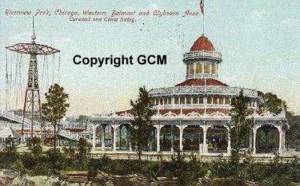
Riverview Sharpshooters Park opened on July 3, 1904. Men would come and practice their shooting skills. Eventually, a carousel, built by the Philadelphia Toboggan Co., was added to give the women and children something to do.
(Riverview dropped the Sharpshooters designation in 1905.)
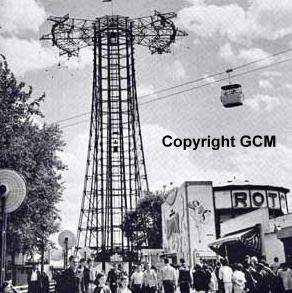
Over the years, the Schmidt family, influenced by trips to Copenhagen's Tivoli Gardens and New York's Luna Park, began adding to the attractions roster. The park grew from 22 acres and three rides to 140 acres and more than 100 attractions.
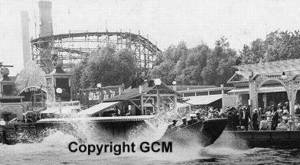
Shows, including a re-enactment of the Civil War battle between the Monitor and the Merrimac, became as much a draw as the thrill rides.
"There were all kinds of barkers," recalled Grace Cruz, of Chicago Ridge. A house of mirrors, a house of horrors, the Congress of Oddities and the Freak Show helped draw people from all over the Midwest.
"To us, the park seemed huge," Cruz said. "Great America is probably bigger, but Riverview seemed huge at the time."
Forty years after it's unexpected closing, Riverview stays at the forefront of people's minds because of the way it made them feel, said Libby Mahoney, chief curator of the Chicago History Museum, where one of the horses from the carousel is now on display.
"It was exciting and a little bit dangerous. It became a social center for the city," Mahoney said. "Once you entered the gates, it was like entering a fantasy."
Such urban entertainment meccas are rare these days, she said. "Kind of like Wrigley Field. I don't think you could create such a place today."
Still, Riverview was not necessarily a utopia, she said. It had its seedy elements, like all amusement parks. And it was a destination for primarily white middle-class customers.
"It was a great day away from your troubles and your cares," Mahoney said.
Though it lasted more than half a century, by the late 1950s it became apparent to some that Riverview's days were numbered.
The population began shifting out to the suburbs. Riverview's middle-class customer base was no longer a bus or street car ride away, Mahoney said.
The writing was on the wall.
But many refused to see it.
After the park closed for the season on Labor Day 1967, many expected it to reopen again the following May. A license had been purchased for its 65th season and the sign had been painted to show the opening date in 1968.
But it was not to be.
Riverview was sold for about $6.5 million on Oct. 3, 1967.
The end of the amusement park was a brutal third strike in a year already rife with bad news. Chicagoans, particularly South Siders, had endured a debilitating blizzard in the winter and a devastating tornado in the spring.
"It was gone," Fruh said.
"I wanted to go back and the only way to do that was to build these models."